Chapter Four: The Cost
A declaration is only words on paper. Making those words real took eight years of war against the most powerful military on earth. This chapter is about what the promise of 1776 cost the men who won it, and what it would later cost the nation to make it true.
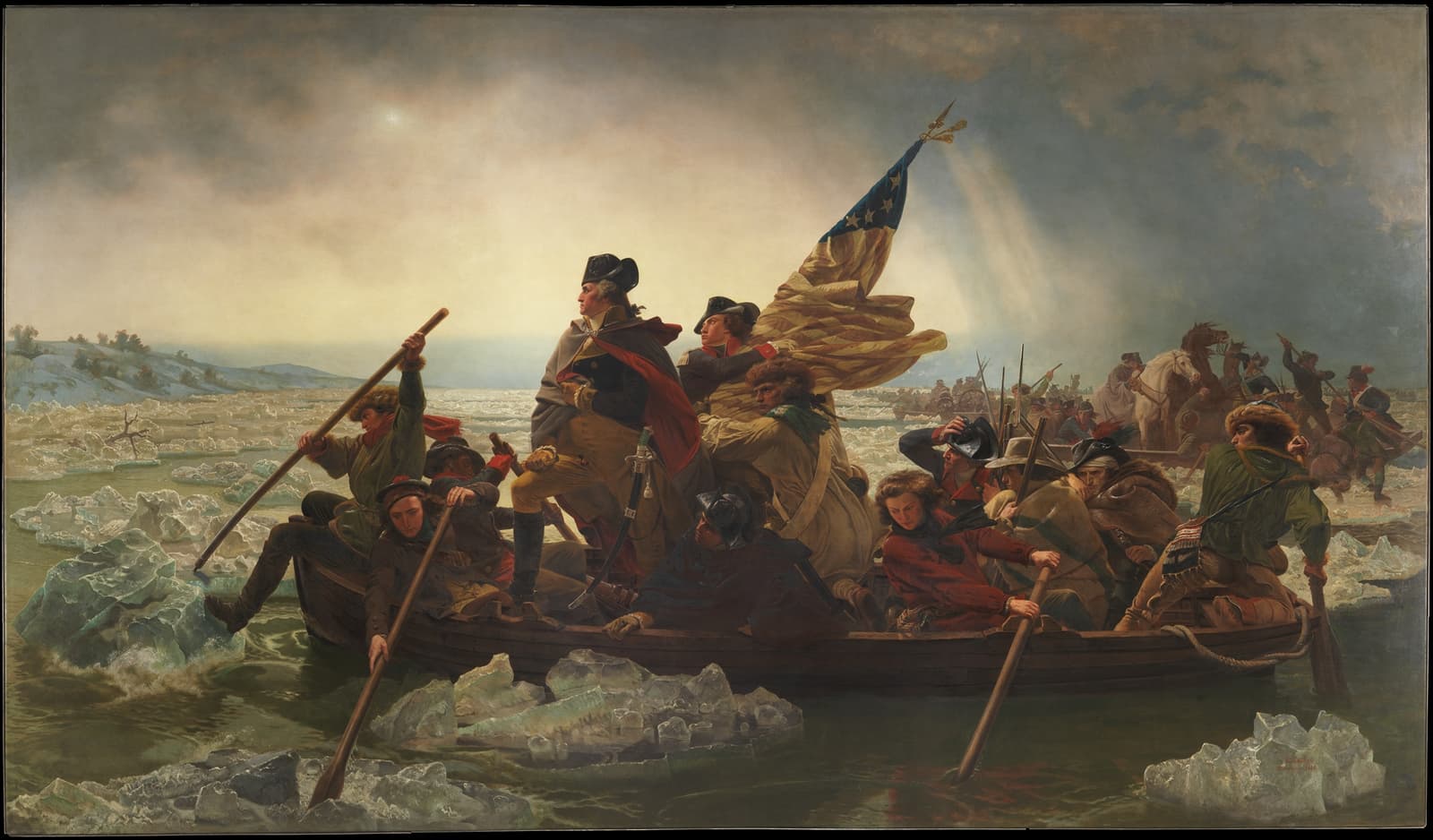
Emanuel Leutze, Washington Crossing the Delaware (1851)
Eight years against the foremost army on earth
When the war began, almost nothing favored the Americans. George Washington took command of an army that was outmatched at every turn, underfed, poorly clothed, short of powder, and forever on the edge of dissolving as men's enlistments ran out. The early years brought mostly defeat. Washington lost New York and was driven across New Jersey, his army shrinking and the cause near collapse by the end of 1776. It was at that lowest point, on a freezing Christmas night, that he recrossed the Delaware River and struck the enemy garrison at Trenton, a small victory that did little to the map but everything to the spirit of a beaten army.
Washington's real genius in those years was not in winning battles but in keeping an army in the field at all, for as long as the army survived, the Revolution lived.
The turning point came in 1777 at Saratoga, where an American victory persuaded France to enter the war as an ally and throw its army, navy, and treasury onto the American side. Then came the testing winter at Valley Forge, where the army endured cold, hunger, and disease that killed thousands and came out of it drilled into a tougher force than it had ever been. The war moved south, and in 1781, with a French fleet sealing the bay, the British army was trapped at Yorktown and surrendered. Two years later a treaty confirmed what the muskets had won: the independence of the United States.
Behind the famous battles lay an ordinary suffering the dates do not show. Men stood watch in the snow without shoes, leaving blood on the frozen ground. They were often unpaid, or paid in money that bought nothing, and they watched friends desert and walk home while they stayed. That such men held together through such winters, on nothing firmer than conviction and the stubborn example of their commander, is itself part of the wonder of the outcome. And it was not only a war between America and Britain. Among the colonists themselves it was nearly a civil war, for many thousands remained loyal to the king, and the Revolution asked ordinary farmers and tradesmen to risk their lives and their property on a cause no one could promise would win.
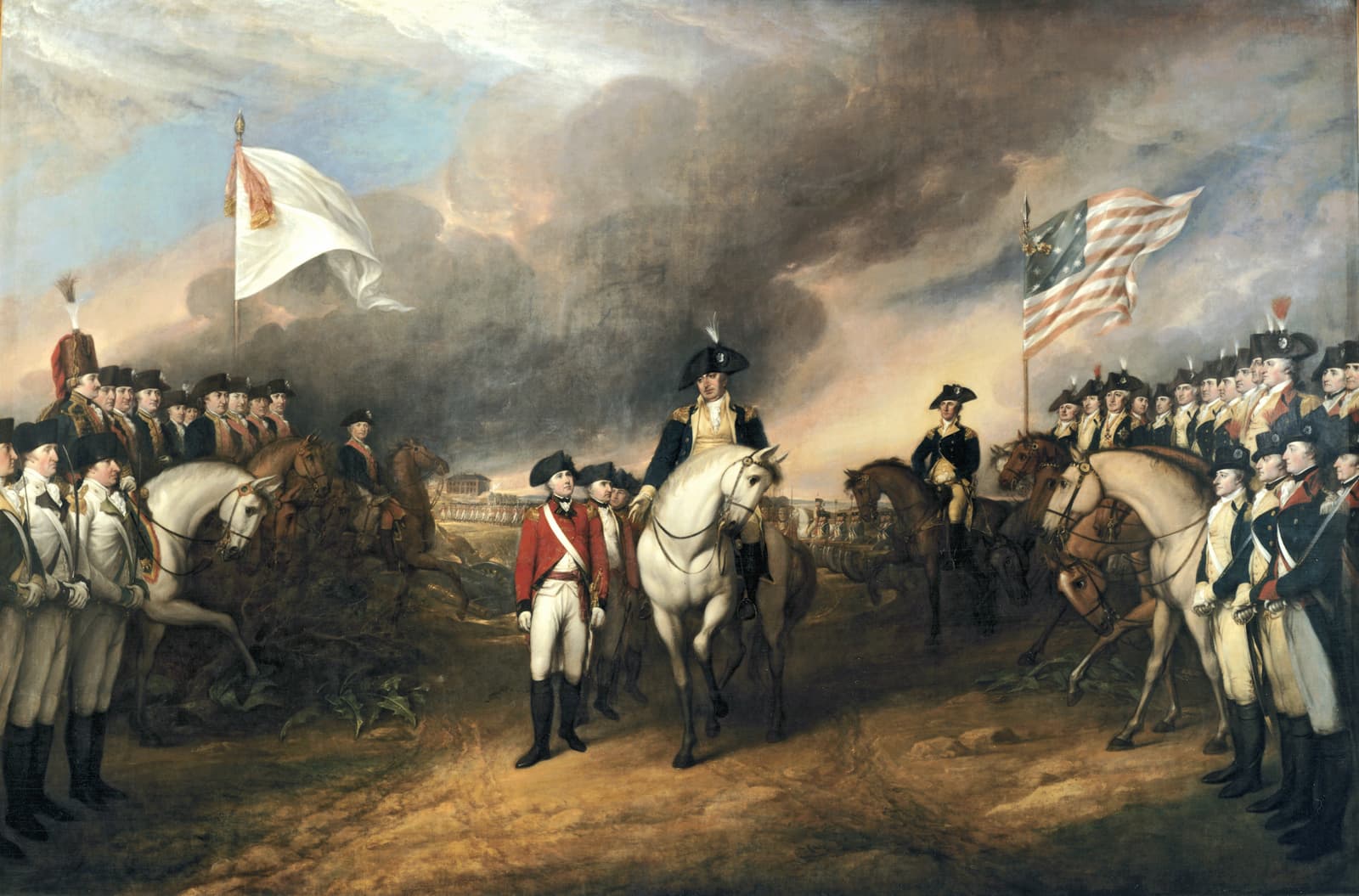
John Trumbull, Surrender of Lord Cornwallis (1820)
The outcome was deeply improbable. A collection of colonies defeated the foremost power in the world. To read that improbability rightly is not to declare the American side simply righteous. It is to recognize that the result was never guaranteed, and that a people who believe God governs the affairs of men may read such an outcome with gratitude rather than with boasting. John Witherspoon, a pastor who signed the Declaration, warned his countrymen against the very pride that victory tempts: "let us guard against the dangerous error of trusting in, or boasting of an arm of flesh."1 A nation may be granted a deliverance it could never have won by its own strength, and the only fitting answer to such mercy is humility.
"Some boast in chariots and some in horses, But we will boast in the name of Yahweh, our God." (Psalms 20:7).
A president who would not claim God for his own side
The Revolution won a nation but did not finish it. The deepest debt of the founding was left to a later generation, and the bill came due at last in the bloodiest war the nation has ever fought.
The Civil War cost more American lives than any war before or since, and the man who led the Union through it did something at its end that almost no victorious leader in history has done. In his Second Inaugural Address, with victory in sight, Abraham Lincoln refused to read the war as simply our side was righteous. He read it instead as God's judgment on the whole nation, North and South alike, for the long offense of slavery. He observed that both sides read the same Bible and prayed to the same God, and that the Almighty had His own purposes that flattered neither. And he reached for words that land with special weight two hundred and fifty years after the founding:
"Fondly do we hope, fervently do we pray, that this mighty scourge of war may speedily pass away. Yet, if God wills that it continue until all the wealth piled by the bondsman's two hundred and fifty years of unrequited toil shall be sunk, and until every drop of blood drawn with the lash shall be paid by another drawn with the sword, as was said three thousand years ago, so still it must be said 'the judgments of the Lord are true and righteous altogether.'"2
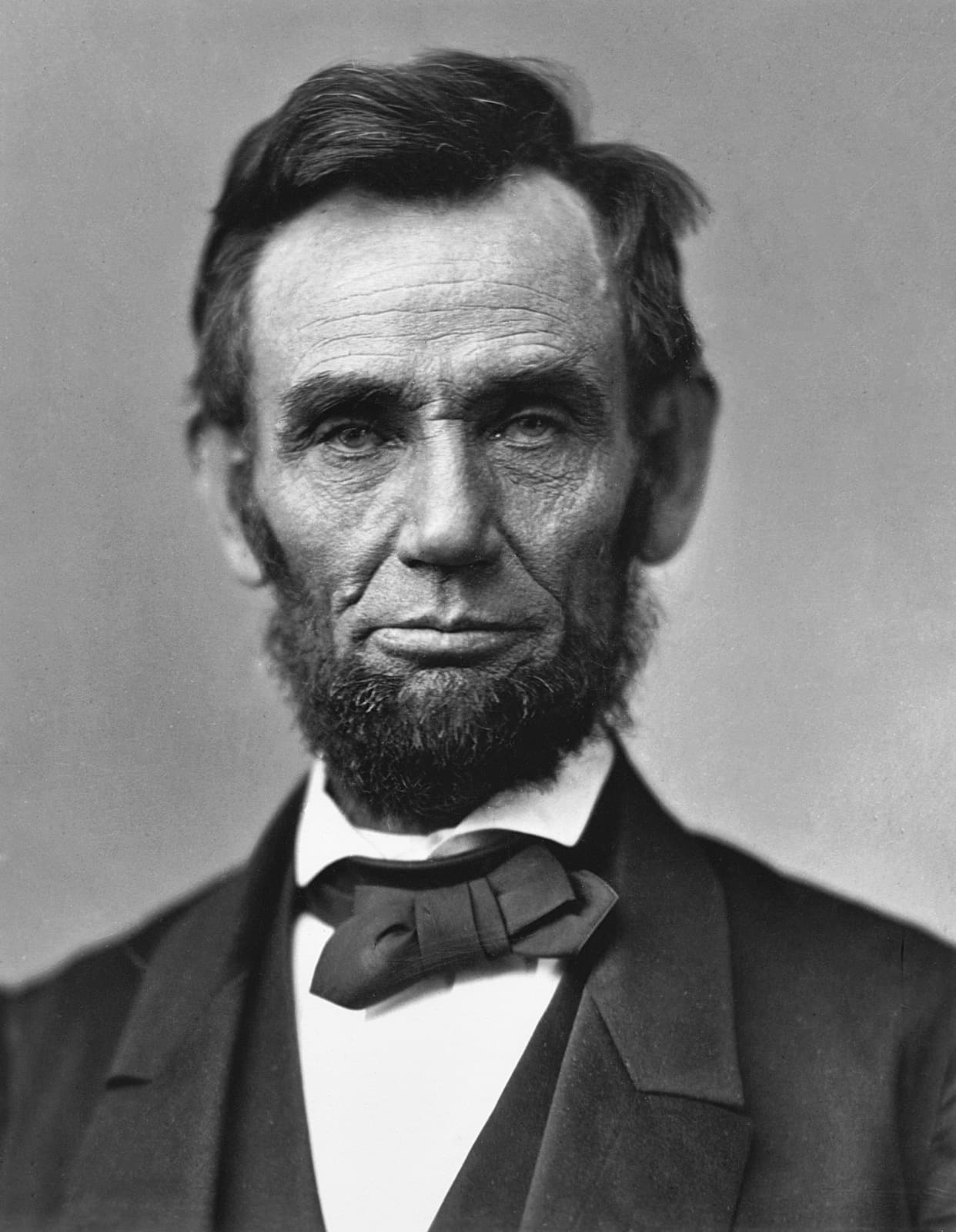
Alexander Gardner, November 8, 1863
Then, with the power to be merciless, he turned to mercy: "With malice toward none, with charity for all, with firmness in the right as God gives us to see the right, let us strive on to finish the work we are in, to bind up the nation's wounds."3 That a man could hold the justice of God and the mercy of God together in the same breath, at the very hour he had the power to crush his enemies, is among the high points of American speech. Lincoln himself was no marble saint, any more than the founders before him. He stretched the Constitution he had sworn to uphold, and his own views on race fell well short of the Declaration's full promise. The truth his words carry does not depend on the man having been better than he was, and it is the words, holding a whole nation under the justice of God, that have outlived him.
For Reflection
"He knows, for instance, that God sits in the stern-sheets of the vessel when it rocks most. He believes that an invisible hand is always on the world's tiller, and that wherever providence may drift, Jehovah steers it. That re-assuring knowledge prepares him for everything. He looks over the raging waters and sees the spirit of Jesus treading the billows, and he hears a voice saying, 'It is I, be not afraid.' He knows too that God is always wise, and, knowing this, he is confident that there can be no accidents, no mistakes; that nothing can occur which ought not to arise."
Charles Haddon Spurgeon, Morning and Evening4
All of that weight, the war and the wound and the long bill paid in blood, rests on the kind of confidence Spurgeon describes. The hand on the tiller did not slip when the nation rocked most, and the promise that turned Joseph's betrayal into the saving of many holds for darker hours still.
"And we know that for those who love God all things work together for good, for those who are called according to His purpose." (Romans 8:28).
Hymn
America the Beautiful
These stanzas come from Katharine Lee Bates, who wrote the original poem in 1893 after ascending Pikes Peak in Colorado and revised it to its final form in 1911. The tune is MATERNA, composed by Samuel A. Ward in 1882. The hymn holds together the gratitude of a free people and the sober awareness that the beauty of the land and the blessings of liberty are gifts to be received with humility, not prizes to be claimed as deserved, and it asks God to mend the nation's every flaw.5
O beautiful for spacious skies,
For amber waves of grain,
For purple mountain majesties
Above the fruited plain!
America! America!
God shed His grace on thee
And crown thy good with brotherhood
From sea to shining sea!O beautiful for pilgrim feet,
Whose stern, impassioned stress
A thoroughfare for freedom beat
Across the wilderness!
America! America!
God mend thine every flaw,
Confirm thy soul in self-control,
Thy liberty in law!O beautiful for heroes proved
In liberating strife,
Who more than self their country loved
And mercy more than life!
America! America!
May God thy gold refine,
Till all success be nobleness,
And every gain divine!O beautiful for patriot dream
That sees beyond the years
Thine alabaster cities gleam
Undimmed by human tears!
America! America!
God shed His grace on thee
And crown thy good with brotherhood
From sea to shining sea!
The promise was bought twice, once at Yorktown and once at Gettysburg.
Footnotes
-
John Witherspoon, "The Dominion of Providence over the Passions of Men" (1776). (Available in the GraceHaven library.) ↩
-
Abraham Lincoln, Second Inaugural Address (4 March 1865). (Available in the GraceHaven library.) ↩
-
Ibid. ↩
-
Charles H. Spurgeon, Morning and Evening (London: Passmore and Alabaster, 1865), morning reading for August 5 (on Romans 8:28). (Available in the GraceHaven library.) ↩
-
Katharine Lee Bates, "America the Beautiful," in America the Beautiful and Other Poems (New York: Thomas Y. Crowell, 1911); tune MATERNA by Samuel A. Ward (1882). ↩