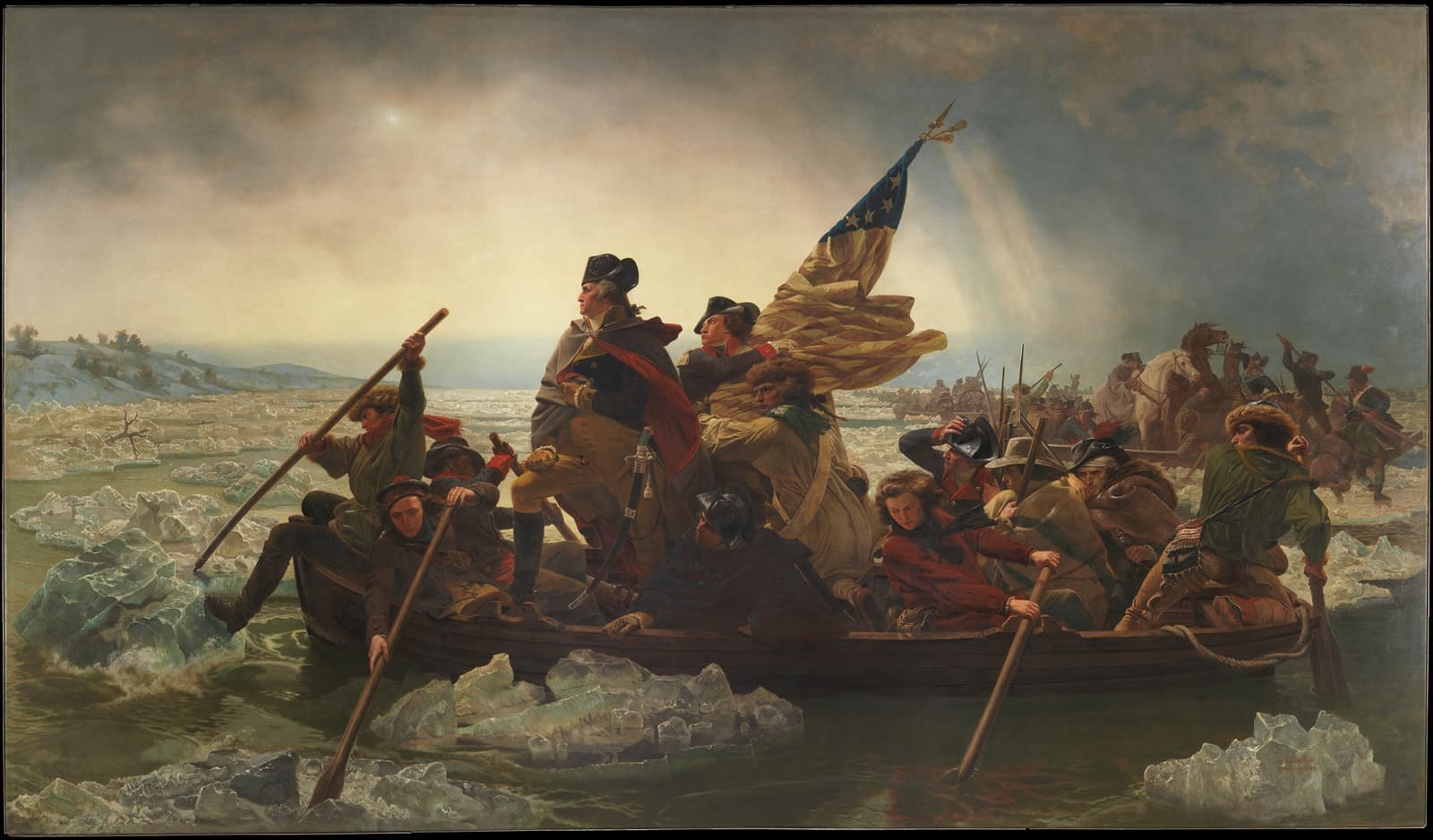
Emanuel Leutze, Washington Crossing the Delaware (1851).
We tend to picture the signing of the Declaration of Independence as a triumph: quills and candlelight and a room full of confident men. It was closer to a funeral they were hoping to avoid.
When those men put their names to the page in 1776, they were not casting a vote. They were committing treason against the most powerful empire on earth, and the document was the evidence. If the Revolution failed, the parchment with their signatures on it was the rope. Each name was, in plain legal fact, a death warrant the man had written against himself. They knew it. They closed the Declaration by pledging to one another their lives, their fortunes, and their sacred honor, and there was nothing rhetorical about the first item on that list.
What the promise actually cost
The pledge was not the end of the cost. It was the beginning. Making the words on the page real took eight years of war against the foremost army on earth, and for most of those years the cause was losing.
George Washington's genius was not in winning battles, of which he lost many, but in keeping an army in the field at all, because as long as the army survived, the Revolution lived. Behind the famous crossings and the named battles lay an ordinary suffering the textbooks skip. Men stood watch in the snow without shoes and left blood on the frozen ground. They went unpaid, or were paid in money that bought nothing, and they watched friends desert and walk home while they stayed. That such men held together through such winters, on nothing firmer than conviction, is itself part of the wonder of how it ended.
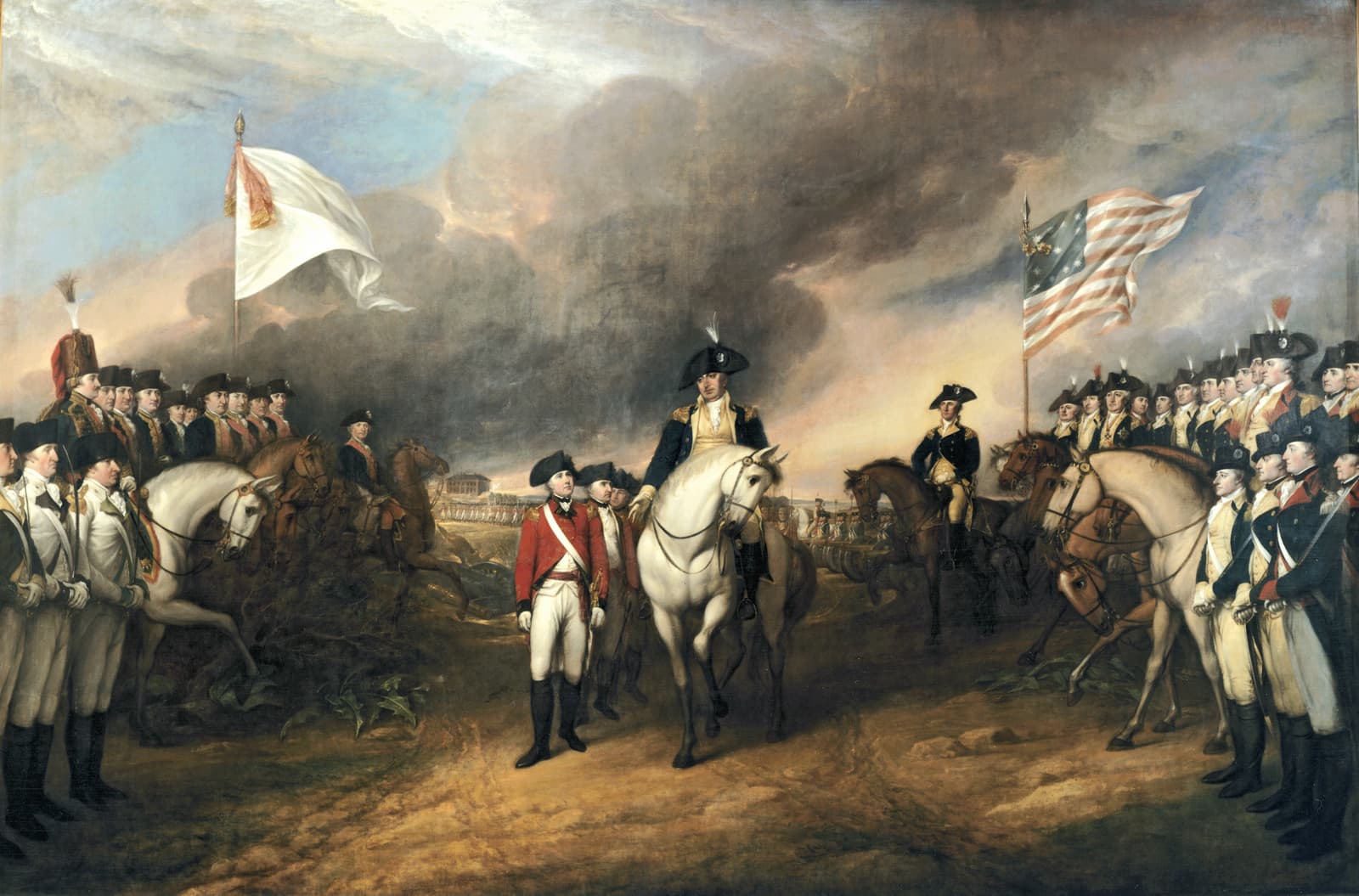
John Trumbull, Surrender of Lord Cornwallis (1820).
The honest way to receive it
When the impossible finally happened, and a collection of farmers and tradesmen defeated the foremost power in the world, the temptation was the one that always follows victory: to strut. John Witherspoon, a pastor who had signed the Declaration himself, warned his countrymen against exactly that: "let us guard against the dangerous error of trusting in, or boasting of an arm of flesh." A people who believe God governs the affairs of men do not read an improbable deliverance as proof of their own greatness. They read it as mercy.
"Some boast in chariots and some in horses, But we will boast in the name of Yahweh, our God." (Psalms 20:7).
That is the honest posture toward the Fourth. Not pride that we are the kind of people who win, but gratitude that we were handed something we could never have secured on our own, and that other men paid for in full before we were born.
The cost behind the holiday
The fireworks are cheap. What they celebrate was not. We tell this part of the story, the price of the promise, in one chapter of a free booklet written for the country's 250th anniversary, Liberty Under God. It is made for families to read aloud together, glad and honest at once, with the final hope set not on the nation but on the God who governs its rise and fall. It is free to read in full, and free to share.
If you want your children to know what their inheritance cost, and to be able to weigh it honestly rather than swallow either the flattery or the contempt, that is the work of GraceHaven Academy. Its American History course walks this same ground with the documents open and GraceHaven's AI on hand to help you see what your child has grasped.
This Fourth, light the fireworks. But tell the children whose signatures were death warrants, and whose blood was on the snow, that the gift was never free.
See our new video series that covers this book as well. Liberty Under God | Episode 6: Two Hundred Fifty Years On — The Thing No Machine Can Fix