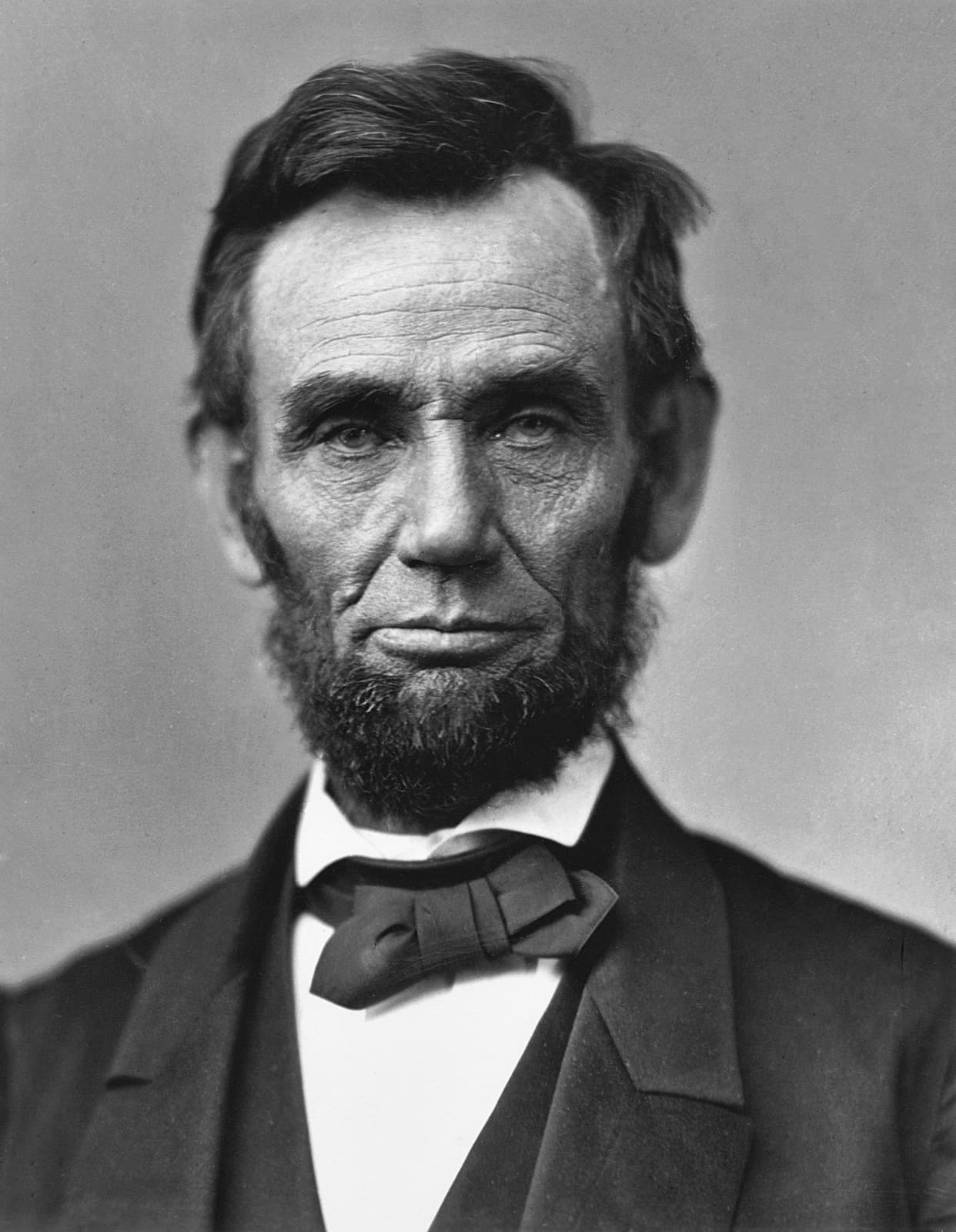
Abraham Lincoln. Alexander Gardner, November 8, 1863.
A monarchy can survive selfish subjects. A dictatorship positively prefers them. The one form of government that cannot survive a selfish people is the one the founders chose: a republic.
Why self-government needs self-governing people
The founders had drunk deeply from the old wisdom of Greece and Rome about what a self-governing people requires, and it had taught them a sobering lesson: liberty does not run on good intentions. A free people must be a virtuous people, willing to put the common good above private appetite, or its freedom rots from the inside and it hands itself over to whoever promises order. You cannot keep a republic with selfish citizens. The founders knew it, quoted it, and feared it.
The logic is simple and unforgiving. A republic asks its citizens to do what no king ever trusted them to do: to govern themselves. Self-government is the whole proposition. And a person who will not govern his own greed, his own anger, his own appetite, has already shown he cannot be trusted with the thing a republic hands him. Multiply that person by a nation and the republic is finished, not by invasion but by erosion, from the inside out.
"When the righteous increase, the people are glad, But when a wicked man rules, people groan." (Proverbs 29:2).
The support no government can manufacture
This is exactly what George Washington warned about on his way out of office, in a farewell the country read aloud for generations. Of all the habits that hold a free people together, he said, "religion and morality are indispensable supports." He was naming something the founders generally believed but did not always say so bluntly: the ordered liberty their Constitution built rests on a moral foundation the government itself cannot produce. A people who fear no God will eventually fear no law. The machinery can restrain a wicked ruler for a while. It cannot restrain a wicked people, because in a republic the people are the rulers.
Why how you raise your children is a public act
Here is the part that should land closest to home. If a republic lives or dies on the character of its citizens, then raising the next generation is not a private hobby. It is civic survival. Every child taught to tell the truth when a lie is easier, to keep a promise that has grown inconvenient, to put the common good above his own appetite, is a brick laid in the foundation a free country stands on. Every child raised to want only what he can get is a crack in it.
The founders' deepest fear, that a free people would rot itself from the inside, runs through the booklet we wrote for the country's 250th anniversary, Liberty Under God, made for families to read aloud together over a few evenings, glad and honest at once, with the final hope set on Christ rather than the nation. It is free to read in full, and free to share.
It is also the reason GraceHaven Academy exists. An education that forms virtue and not only skill, that anchors a child's learning in what is true and trains him to govern himself, is doing the quiet, foundational work a republic cannot live without. Its American History course is one room in a much larger house.
A free people must be a good people. The fireworks will not keep the republic. The citizens will, or no one will.
See our new video series that covers this book as well. Liberty Under God | Episode 4: The Cost — How a Nation Was Carried Through